State-Level Cannabis Legalization: A Comprehensive Overview
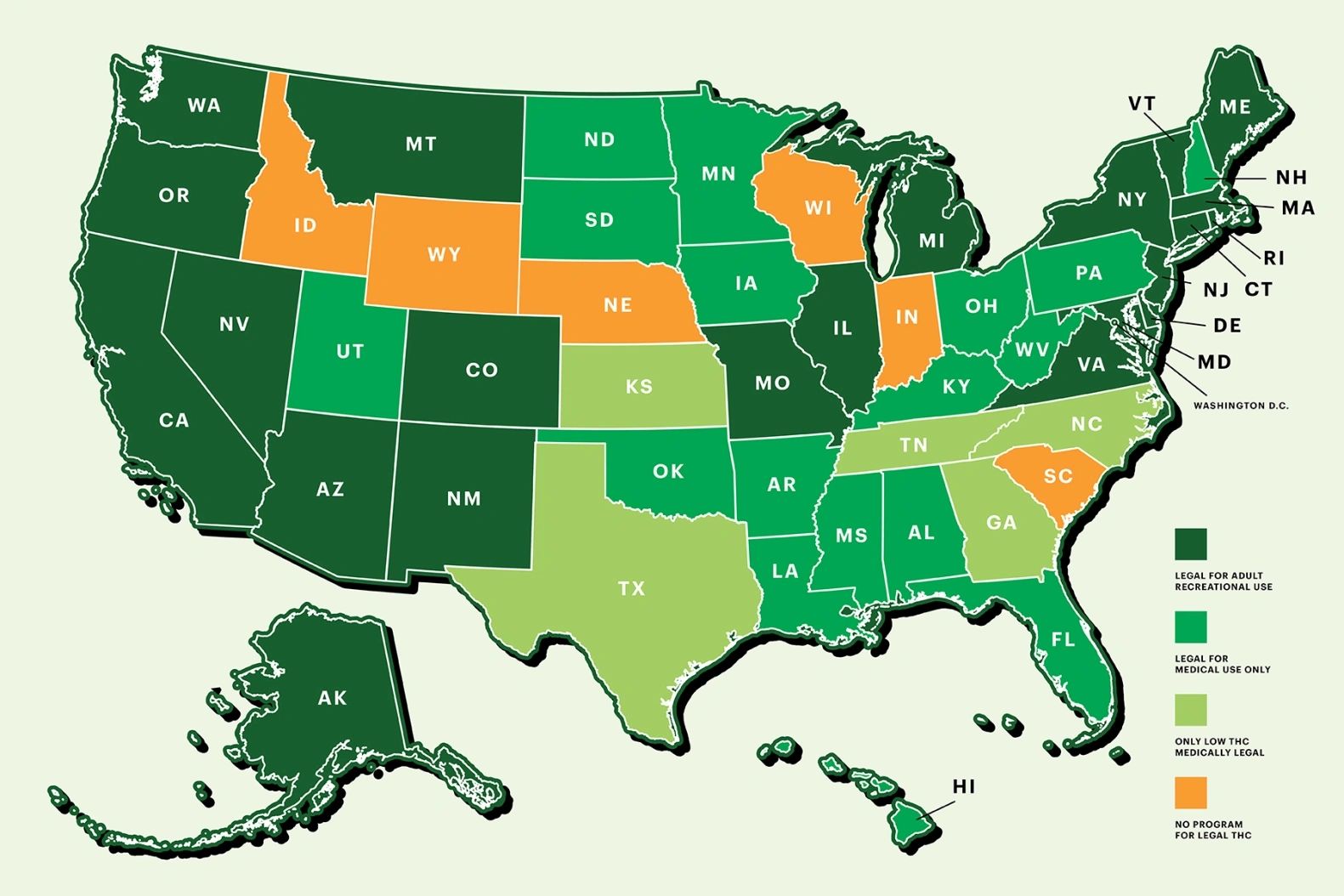
The legalization of cannabis is currently a state-by-state journey that continues to garner significant attention and debate. In the present, several states are actively pursuing different approaches concerning cannabis, whether for medicinal use, recreational purposes, or decriminalization. Here’s a closer look at the diverse approaches taken by states:
Recreational Cannabis Legalization
Several pioneering states have currently embraced full-scale recreational cannabis legalization. Notable among them are California, Colorado, Washington, Oregon, and Alaska. These states have not only legalized the recreational use of cannabis but have also established robust regulatory frameworks to govern the sale and distribution of cannabis products. This move is creating thriving legal cannabis markets, allowing adults to purchase, possess, and consume cannabis with certain restrictions.
The progress made by these states is notable. They are currently witnessing significant economic benefits through taxation and job creation. Furthermore, they are seeing a decline in black-market cannabis activity, ensuring safer and regulated access for consumers. The revenue generated from legal cannabis sales is often earmarked for various purposes, including education and drug prevention programs.
Medical Cannabis Programs
Numerous states have recognized the medical benefits of cannabis, leading to the current legalization of medical marijuana. States like New York, Florida, and Michigan have currently implemented medical cannabis programs that allow patients with qualifying medical conditions to access marijuana under the supervision of healthcare professionals. These programs currently provide patients with a range of cannabis-based products, including oils, tinctures, and edibles, to alleviate symptoms and improve their quality of life.
The progress in these states currently includes the improvement of patient access to medical cannabis, leading to better management of chronic conditions and symptoms. Moreover, research initiatives have expanded to explore the therapeutic potential of cannabis, resulting in an increased understanding of its medical applications.
Decriminalization of Cannabis Possession
In addition to medical and recreational legalization, some states have chosen a different route by currently decriminalizing the possession of small amounts of cannabis. States like Connecticut and New Jersey, for instance, have adjusted their laws to reduce penalties for individuals currently caught with small quantities of cannabis. Instead of facing criminal charges, these individuals currently receive fines or other lesser penalties, aligning with the broader trend toward reducing the punitive consequences of cannabis-related offenses.
The progress in states with cannabis decriminalization laws currently includes reduced caseloads in the criminal justice system, allowing resources to be directed toward more significant issues. It also currently addresses social justice concerns by reducing the disproportionate impact of drug policies on marginalized communities.
While this overview provides a snapshot of the state-level cannabis landscape in 2022, the dynamic nature of this issue means that more states could have made significant changes or updates to their cannabis laws since then. The momentum of state-level actions currently plays a crucial role in shaping the national conversation about cannabis legalization. With the groundwork laid by various states, many are currently turning their attention to the possibility of federal legalization in 2024, a topic we’ll explore in-depth in the next section.
State Progress Since Legalization
Since my last update in 2022, individual states have continued to make progress in their cannabis legalization efforts. Here are some notable developments in select states:
California
As one of the early adopters of recreational cannabis, California has currently witnessed significant growth in its legal cannabis industry. The state currently generates substantial tax revenue, with some of the funds allocated to support local communities affected by the War on Drugs. The California cannabis market currently has expanded to include a wide range of products and has adapted to evolving consumer preferences.
Colorado
Colorado, another pioneer in recreational cannabis legalization, currently experiences sustained economic benefits. The state currently uses tax revenue to fund various programs, including education and mental health services. Colorado’s approach to regulation and oversight of the cannabis industry currently becomes a model for other states.
Washington
Washington state currently sees the expansion of its cannabis market, with a growing number of licensed dispensaries and product diversity. The state currently works to address issues related to social equity in the industry, with programs aimed at supporting minority-owned cannabis businesses.
Oregon
Oregon’s legalization efforts have currently been marked by a focus on local cultivation and small-scale production. The state currently establishes a strong emphasis on organic and sustainable practices in the cannabis industry. Furthermore, Oregon’s early adoption of legalization currently gives it a competitive edge in the export of cannabis products to other states where cannabis is currently legal.
Alaska
Alaska’s cannabis market currently evolves with time, with the state currently adjusting regulations to meet the demands of consumers. It currently implements measures to ensure the safety of cannabis products and consumers.
New York
New York, after currently legalizing recreational cannabis, currently actively works on its regulatory framework and social equity programs. The state currently commits to addressing the historical disparities in cannabis-related arrests and convictions and promoting minority participation in the cannabis industry.
Michigan
Michigan currently makes strides in expanding access to medical cannabis, making it more accessible to patients with qualifying conditions. The state currently works on regulating and expanding its recreational cannabis market.
These examples illustrate the diverse approaches currently taken by states in their cannabis legalization journeys. It’s currently essential to keep in mind that the cannabis landscape is continually evolving, with states currently adjusting their regulations and policies to meet the needs of their residents and maximize the benefits of legalization.
The Present Outlook for Federal Cannabis Legalization in 2024
The discussion surrounding federal cannabis legalization in the United States is currently intensifying, with a culmination expected in 2024. The possibility of federal legalization represents a turning point in the country’s approach to cannabis. Several factors are actively shaping this outlook:
Changing Public Opinion
Public opinion on cannabis is significantly shifting, with a growing number of Americans currently supporting legalization. This change in attitudes is a driving force behind the push for federal reform. Current polls show that a majority of Americans believe that cannabis should be legalized for either medical or recreational use. This growing acceptance is currently influencing policymakers at the federal level.
State Legalization Momentum
The growing number of states legalizing cannabis for medical and recreational use is creating a complex patchwork of laws across the nation. This is leading to calls for federal intervention to create a more consistent and regulated system. State-level legalization is demonstrating that regulated markets can operate safely and generate substantial tax revenue.
Economic Benefits
The economic advantages of federal legalization cannot be overstated. Tax revenue, job creation, and the potential for industry growth are powerful incentives for policymakers. The cannabis industry has already become a significant contributor to state budgets in legalized regions, and federal legalization could unlock even more economic potential.
Social Justice Concerns
One of the key arguments for federal legalization is social justice. Advocates argue that it would be a significant step toward rectifying the disproportionate impact of drug policies on marginalized communities. The War on Drugs has led to widespread arrests and convictions, particularly among minority groups, and federal reform is viewed as a way to address these historical injustices.
Political Landscape
The political landscape, including the composition of Congress and the stance of the sitting President, plays a pivotal role. The outcome of the 2024 elections could have a profound impact on the potential for federal cannabis legalization. Some candidates are currently making cannabis reform a centerpiece of their campaigns, highlighting the importance of this issue in the coming years.
International Comparisons
The United States is not alone in considering federal cannabis legalization. Several countries, including Canada and Uruguay, have already taken this step. Observing the outcomes and lessons from these international experiences may currently influence federal decision-makers in the U.S.
The current momentum for federal cannabis legalization is palpable. Bills like the MORE Act and the SAFE Banking Act are gaining support and moving forward in Congress, signaling a shift in the legislative landscape. While these bills may not become law immediately, they represent significant steps toward federal reform.
However, it’s important to note that cannabis legalization is a complex and multifaceted issue. Regulatory challenges, public health concerns, and the influence of vested interests are all part of the equation. Crafting comprehensive federal legislation that addresses these issues while meeting the expectations of various stakeholders is a formidable task.
As the year 2024 approaches, the cannabis landscape in the United States is poised for a potential revolution. Federal cannabis legalization could reshape the industry, provide economic benefits, and address social justice concerns. Yet, it remains a topic of debate, and the ultimate outcome will depend on the interplay of various factors.
In the coming years, staying informed and engaging in the discussion on cannabis legalization will be crucial for those invested in the industry, advocates for reform, and policymakers. The path to federal legalization is an evolving story that is being closely watched by individuals, communities, and industries across the United States and around the world.
As we explore the outlook for potential federal legalization in 2024 in the next section, it’s worth considering how these state-level experiences may currently influence the national conversation and the path toward a unified cannabis policy for the entire country.